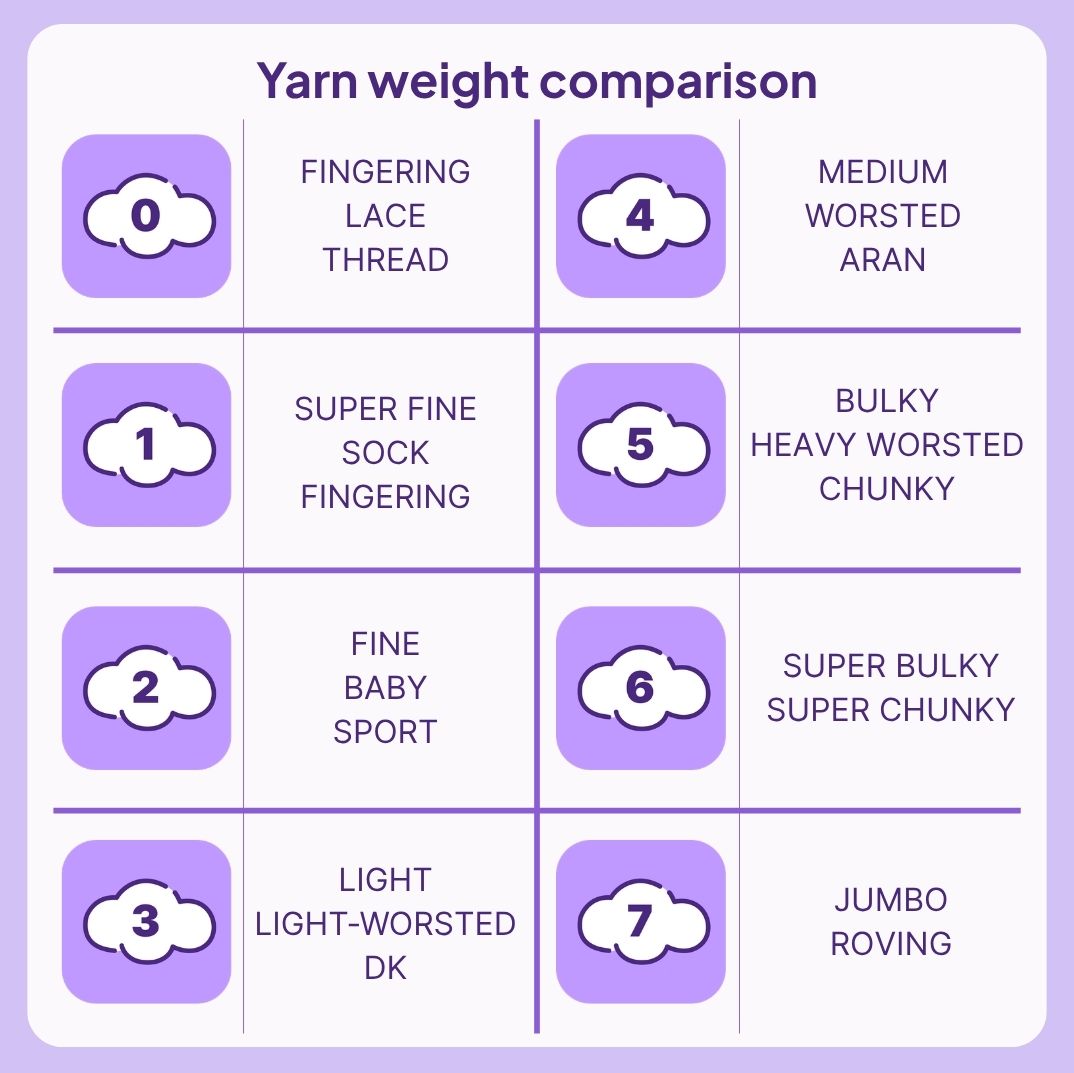
Weight means thickness
Yarn weight is the thickness category, not the weight of the ball. A worsted yarn is thicker than a fingering yarn, even if both balls weigh 100 grams. Start by comparing the label with the weight named in your pattern. Then check gauge, because two yarns in the same category can still work up differently.
Length and ball size answer different questions
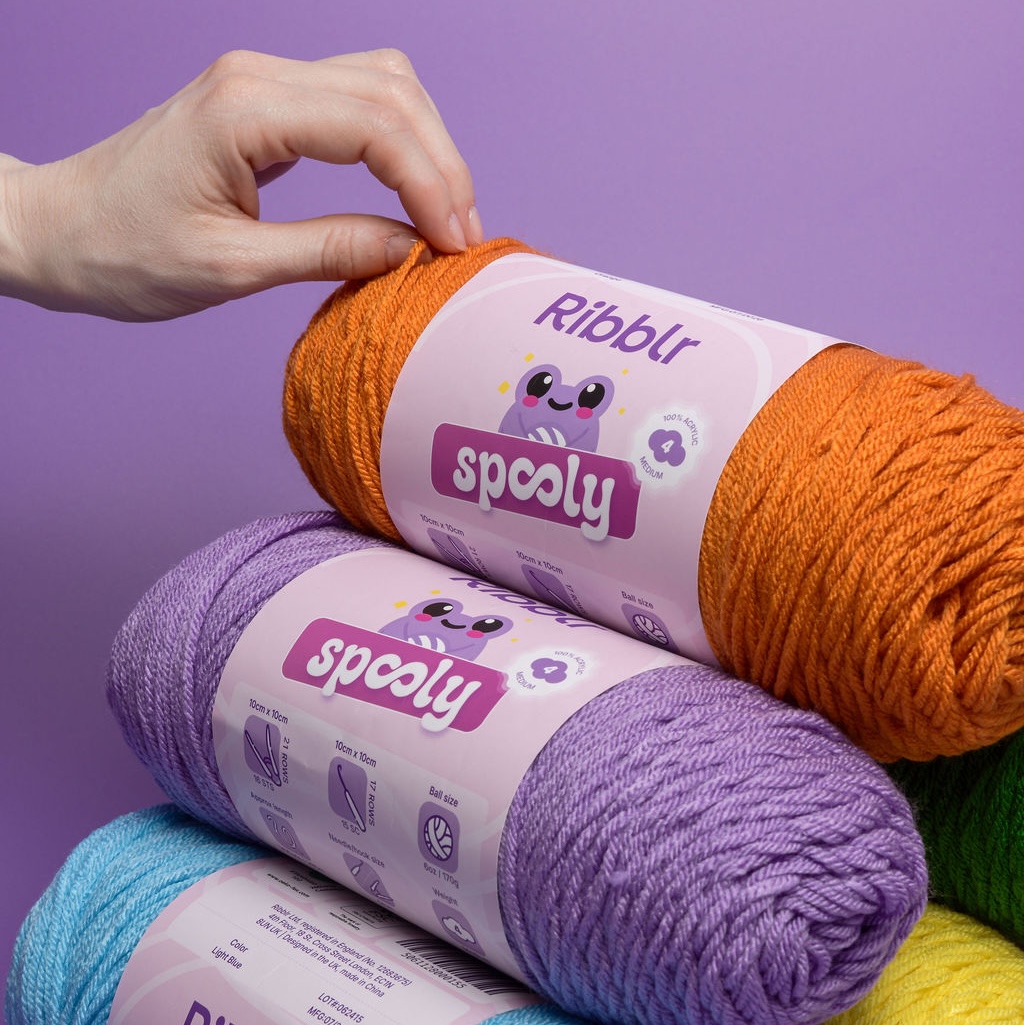
Ball size tells you how much the ball weighs, usually in grams or ounces. Length tells you how many meters or yards of yarn are in it. I use the length to work out how many balls to buy: a 100 gram ball is not automatically twice the length of a 50 gram ball. Fibre and thickness change that calculation.
For a project with several colors, I check the length needed for each color separately. The ball count guide walks through the calculation.
Use gauge and tool sizes as a starting point
The suggested hook or needle size is a place to begin, not a rule. Your tension and the stitch pattern can change the result. A label gauge usually describes a standard swatch; the gauge in your pattern is the one to match for a fitted project. I make a swatch before deciding to buy all the yarn for a garment.
Check fibre and care before checkout
The fibre content helps explain how a yarn may feel and behave. The care instructions tell me whether the finished item can be washed the way its owner will actually use it. I check both for baby gifts, daily wear and anything I hope will last through frequent washing. You can compare weight, length, composition and care details while exploring Ribblr Yarn.


 Craft easily with Ribblr ePattern
 Connect with crafters worldwide
 Buy and sell patterns, yarn and more